
Trained on-premise AI models for radiology. Delivered as an owned asset.
SAQR MED is computer vision for the early detection of focal pathologies on MRI. We train the model on real clinical studies, transfer it together with usage rights, train the customer's clinical team, and operate the platform on-premise. Ready today — the liver model, detecting 7 pathologies. In development — heart and pancreas. Separate R&D track — early detection of nonspecific ulcerative colitis.
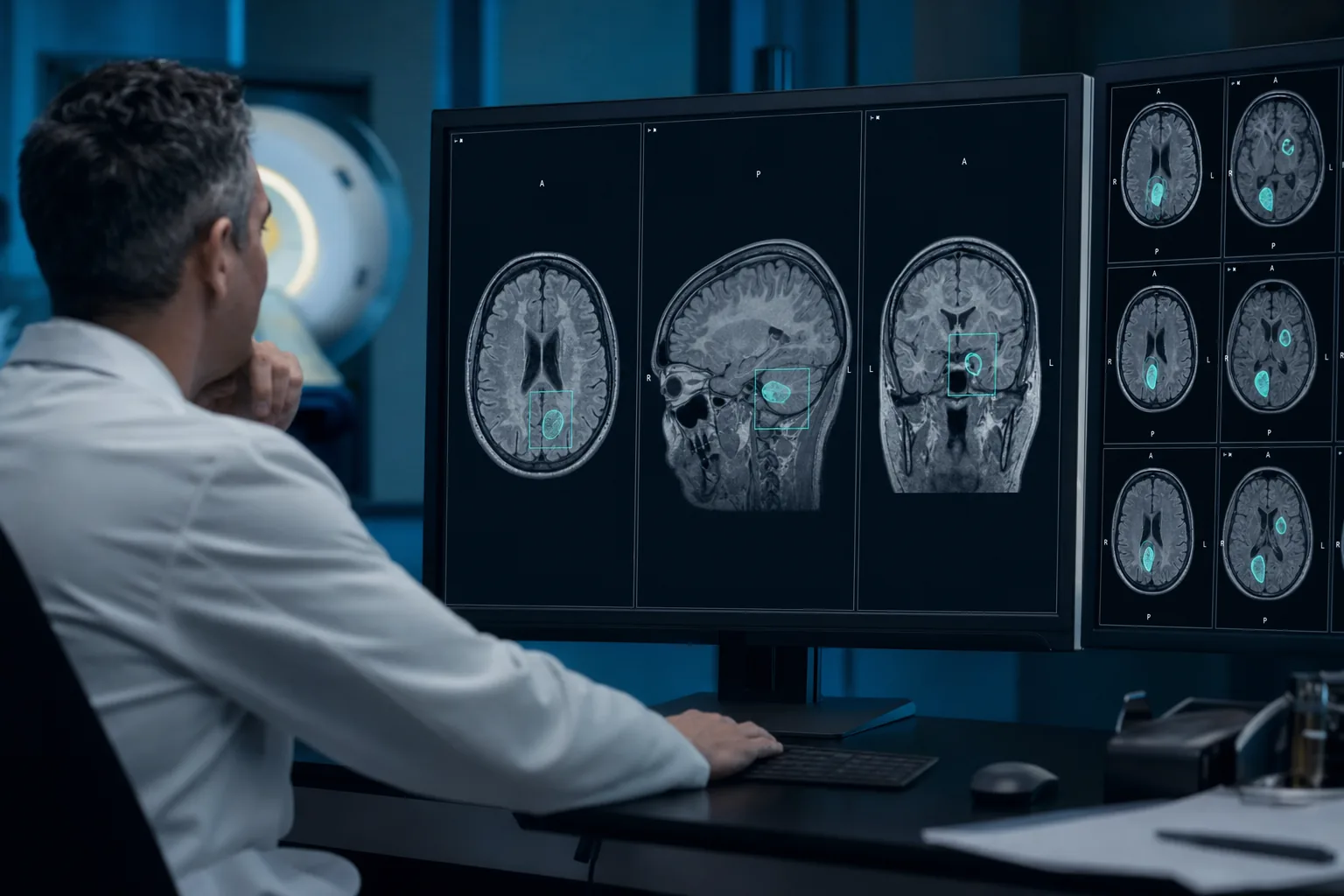
Not one model — a platform with a reproducible process
SAQR MED is not a single algorithm. It is three layers: trained models, a client workstation deployed inside the clinic's PACS network, and a clinical factory that produces new models on demand.
AI models for pathology detection
Ready — liver MRI. One model detects 7 pathologies: steatosis, hepatitis, fibrosis, cirrhosis, cysts, hemangiomas, hepatocellular carcinoma. Trained on 20,000+ real MRI studies. In development — heart (angiography, 32 coronary parameters) and pancreas. Separate R&D track — early detection of nonspecific ulcerative colitis.
SAQR MED Viewer — a workstation inside the clinic's PACS network
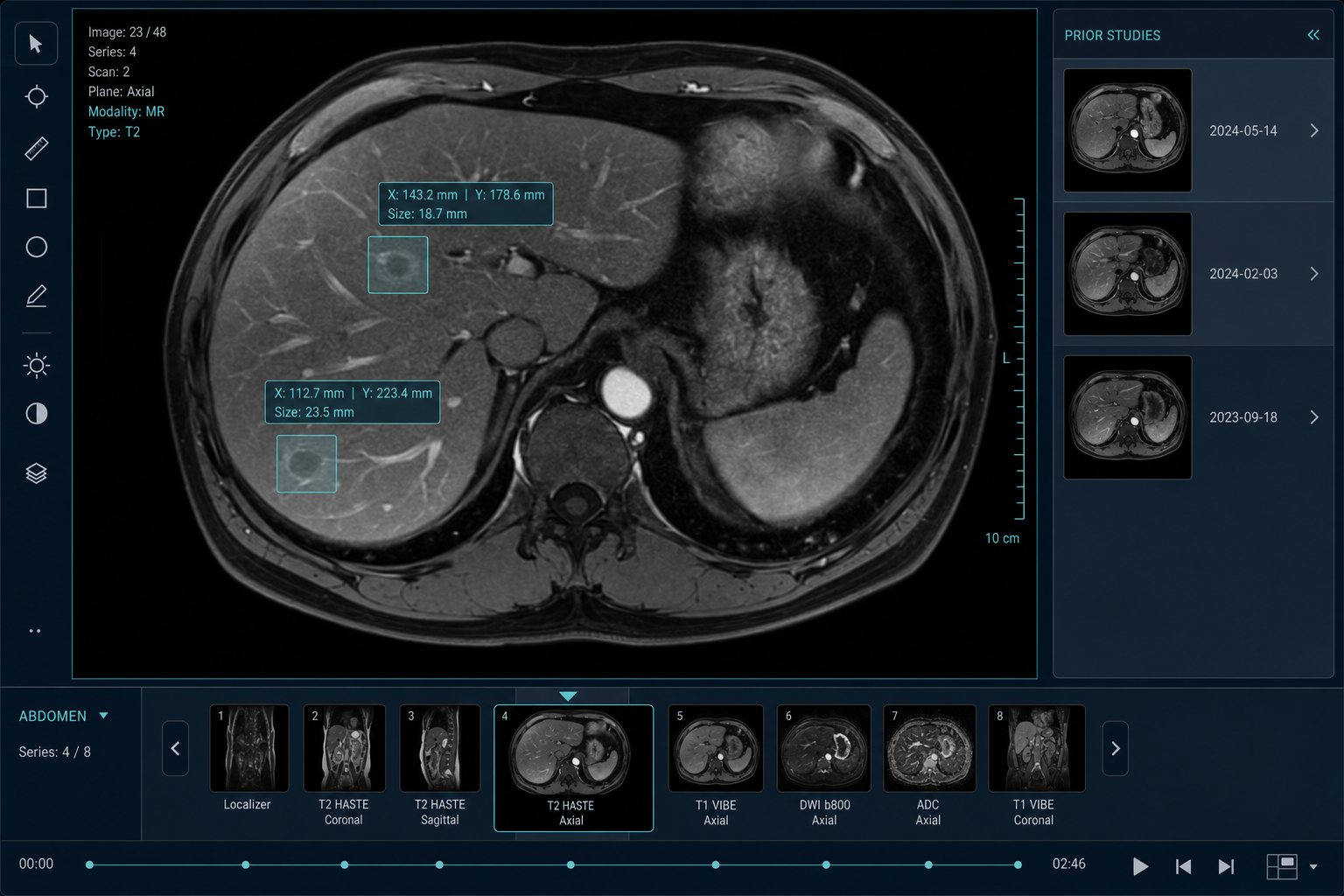
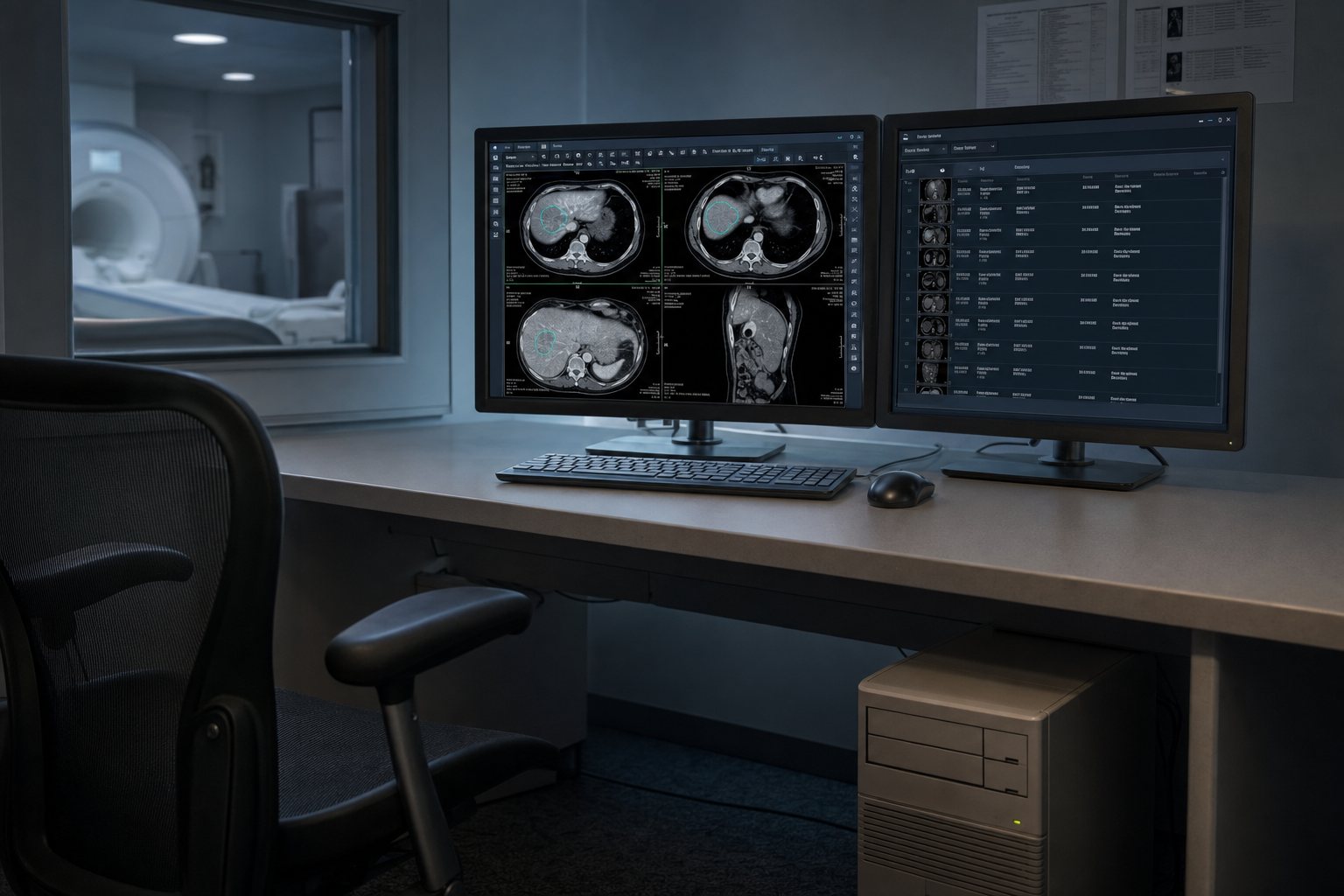
A full DICOM viewer with AI findings overlaid directly on the slice — deployed as a client workstation inside the clinic's PACS network. We do not replace PACS and we do not touch scanner software. We connect to the archive over standard DICOM protocols. Annotations returned as standard DICOM objects (labelmap Supplement 243).
Clinical factory — a process that produces new models
Annotators are physicians with at least a PhD (Candidate of Medical Sciences). Scientific director — Doctor of Medical Sciences, professor, 48 years of clinical practice, 359 scientific publications, 3 patents. Proprietary methodology for pathology parameterisation. This is reproducible R&D capacity — tuned to a protocol, to a pathology list, to a market.
One ready model. Two in development. One separate R&D track.
Liver MRI · Ready
The ready product. 7 pathologies detected by a single model. Trained on 20,000+ real MRI studies.
Heart · In development
Angiography — 32 coronary parameters extracted from a single study. No direct market equivalent.
Pancreas · In development
One of the hardest organs for early diagnostics. Focal changes are often missed until late stages.
Ulcerative colitis · Separate R&D
Early detection of nonspecific ulcerative colitis. Methodology is in place; the track is open for an investor partner.
Why this is not another radiology SaaS
Owned asset, not a subscription
Global players in this space run on SaaS. Our client pays once and stays vendor-independent. For OEMs this is critical — SaaS does not fit the hardware distribution model.
On-premise · data stays inside the client's perimeter
Under local data-protection regulations, patient medical data cannot legally leave the country. Cloud-only competitors operate in a legal grey zone. We are compliant by design.
20,000+ real patients in training
Global reference sources have documented that a majority of FDA-cleared AI devices do not disclose training set size. The pancreas leader was trained on ~3,200 patients. We have reproducible capacity, not a one-off dataset.
Full product page, architecture, clinical scenarios
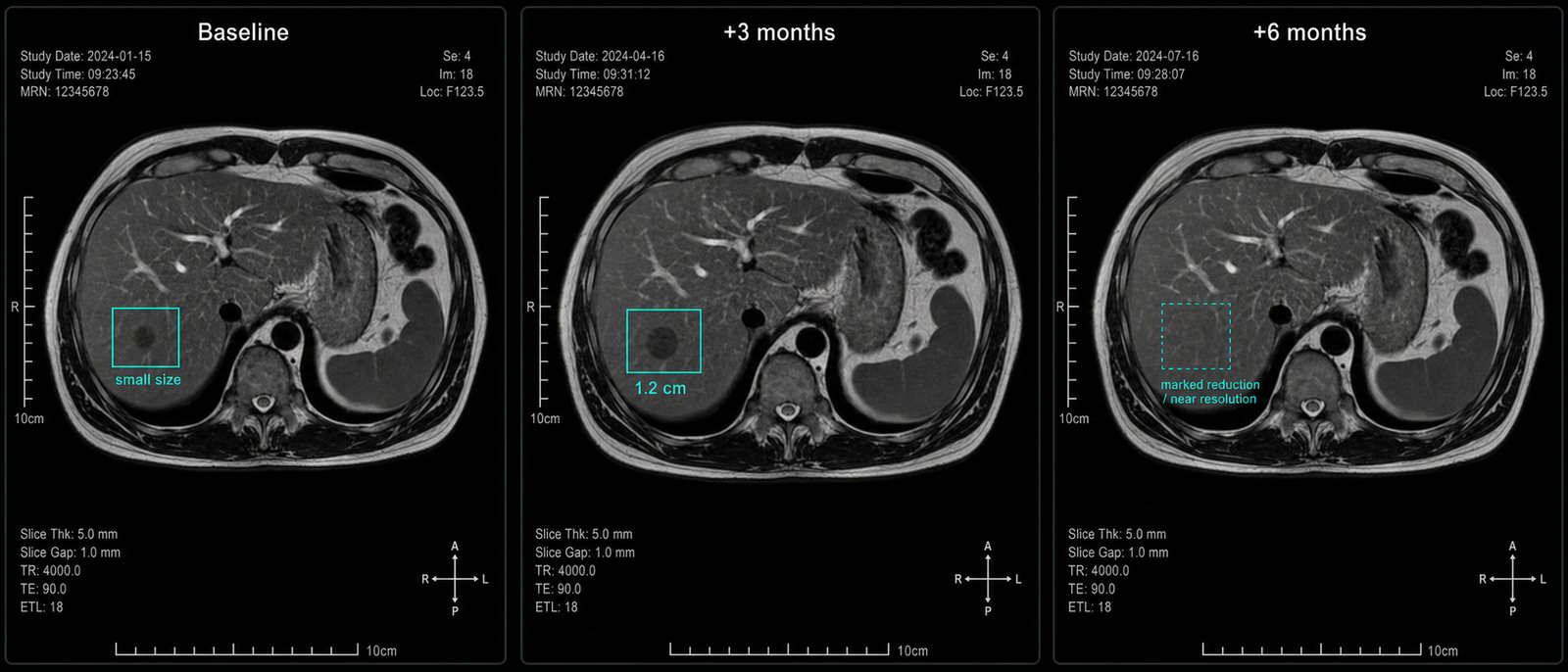
Everything on SAQR MED — how it works, the commercial model, the clinical scenario Day 1 → 3 months → 6 months — lives on the dedicated product page.